Feb 28, 2026
SIBO breath testing is widely used because it is non-invasive and relatively easy to perform. But what happens before the test begins can have a big impact on the results.
Breath tests don’t measure bacteria directly. Instead, they detect gases produced when gut microbes ferment the sugar solution you drink at the start of the test. Because the test relies on these fermentation patterns, factors such as diet, medications, and even morning habits can influence the results.
Taking a few preparation steps helps ensure the clearest and most reliable data.
Preparing for a Breath Test
Proper preparation helps create a clean baseline for the test. The goal is to minimize background fermentation so that any gas measured during the test reflects how your body responds to the test sugar, not leftover food or ongoing digestion.
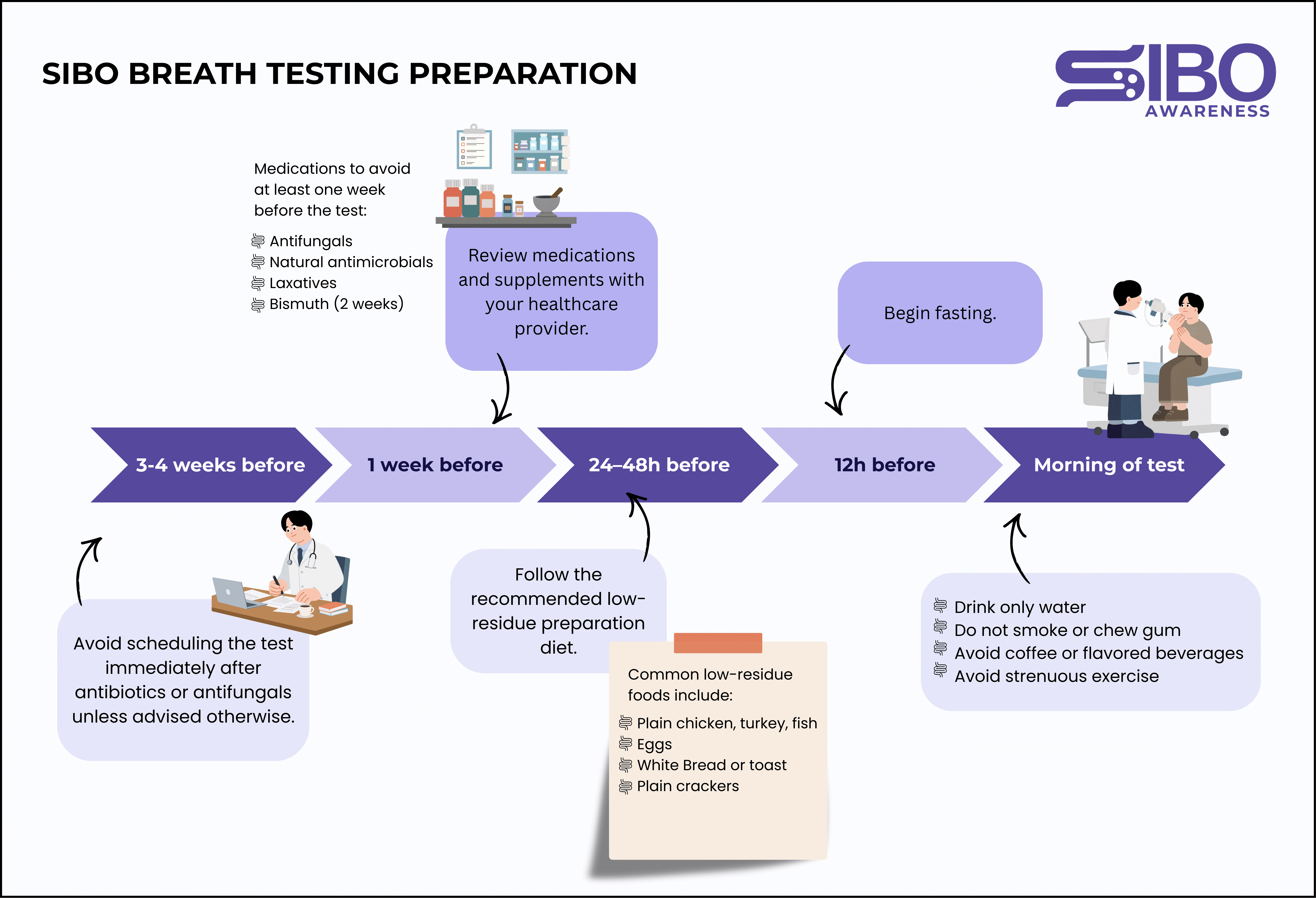
Several weeks before testing
Some medications and supplements can affect test results. Your doctor may recommend stopping certain items two weeks or more before testing, including antibiotics, antifungals, or probiotics.
1 week before
Review medications and supplements with your healthcare provider. Medications such as bismuth, herbal antimicrobial products, and laxatives are often discontinued at least one week before testing.
24–48 hours before
Most breath test protocols recommend following a low-residue diet the day before testing. This means eating simple foods that produce minimal fermentation and avoiding foods that can increase gas production and raise baseline levels.
Allowed Foods | Foods to Avoid |
Plain white rice | Fruits and vegetables |
Eggs | Beans or lentils |
Plain poultry, fish, or meat | Milk and most dairy products |
Black coffee or tea | Whole grains and high-fiber foods |
Alcohol |
12 hours before
Patients are usually asked to fast overnight before the test. Water is typically allowed, but food and other drinks should be avoided.
Morning of the test
Typically, you are only permitted to drink water on the day of the test. You should also avoid smoking, chewing gum, and strenuous exercise. Chewing gum can stimulate digestion and may introduce fermentable sugars, smoking can alter the gases measured in the breath, and strenuous exercise can speed intestinal transit, potentially changing when gas is produced during the test.
What to Expect During the Test
Breath tests are usually performed in a clinic or at home using a test kit. In both cases, the process is simple.
The test typically lasts two to three hours, and results are usually available within a few days.
If done in a clinic, you will provide a baseline breath sample and then drink the test solution. Additional breath samples are collected at regular intervals, usually every 15 minutes. Because there is time between samples, you may want to bring something to keep you occupied.
If testing at home, review the instructions carefully ahead of time and contact your doctor’s office if anything is unclear. Several instructional videos are also available online, including Taking the Hydrogen Breath Test: A Step-by-Step Guide and Hydrogen Methane Breath Test Instructional Video.
Understanding Your Test Results
Once the breath samples are analyzed, your doctor will review how gas levels changed over time. An early rise in hydrogen may suggest bacterial overgrowth in the small intestine. Elevated methane levels are often associated with intestinal methanogen overgrowth (IMO), which is commonly linked with constipation. Some tests also measure hydrogen sulfide, which may be associated with diarrhea and abdominal pain.
Your doctor will interpret these results alongside your symptoms and medical history to determine whether SIBO or another digestive condition may be present.
10 Simple Dos and Don’ts
Do follow the pre-test diet
Most testing protocols require a low-residue diet for 24–48 hours before the test. These simple foods leave very little material behind in the intestine and produce minimal fermentation by gut microbes. This helps reduce background gas so changes during the test are easier to interpret.
Don’t eat late the night before
Eating late can keep digestion active overnight and elevate baseline gas levels. Most protocols recommend fasting for at least 8–12 hours before testing.
Do pause antibiotics before testing
Antibiotics can significantly alter gut microbes and fermentation patterns. Testing is most accurate when it reflects your usual gut environment.
Don’t take probiotics or antimicrobial supplements right before the test
Probiotics and herbal antimicrobials can temporarily shift microbial activity and gas production. These are often paused before testing to avoid altering results. This decision should be made in consultation with your healthcare provider.
Do review medications that affect digestion
Laxatives, motility agents, and certain digestive medications can change how quickly carbohydrates move through the gut. Your healthcare provider may recommend temporarily adjusting some medications.
Don’t drink coffee or flavored beverages before the test
Coffee, tea, and flavored drinks can stimulate digestion or introduce fermentable compounds. Most protocols allow only plain water before testing begins.
Don’t chew gum or smoke before testing
Both chewing gum and smoking can stimulate digestive activity and interfere with breath gas readings.
Do brush your teeth — but avoid flavored products
Oral hygiene is important, but strongly flavored toothpaste or mouthwash may introduce fermentable compounds. If possible, use plain toothpaste and avoid mouthwash on the morning of the test. Be careful not to swallow toothpaste.
Don’t exercise vigorously right before the test
Intense physical activity can affect breathing patterns and metabolism. It’s best to arrive at the test rested and relaxed.
. Do interpret results in context, with your healthcare provider
A breath test measures gas patterns over time — not bacterial counts. No single number tells the full story. Interpretation works best when clinicians consider:
baseline gas levels
timing of gas increases
symptoms
medical history
Key Takeaways
When done correctly, breath testing can provide valuable insight into digestive health. But the integrity of the data begins long before the test solution is consumed.
Taking a little extra care during preparation can help ensure your breath test provides the clearest possible picture of what is happening in your gut.
Our article Understanding SIBO Breath Testing is also a helpful resource.