Mar 9, 2026
Breath testing is one of the primary tools used to evaluate suspected small intestinal bacterial overgrowth (SIBO). These tests measure gases produced when gut microbes ferment carbohydrates, providing a non-invasive way to assess microbial activity in the digestive tract. Because breath tests detect gases rather than bacteria themselves, they can reveal important patterns in gut activity while still leaving some aspects of microbial overgrowth unresolved.
In this Research Spotlight, we highlight two studies that explore both the potential and the limits of breath testing. One large nationwide study examines how different gases detected during breath testing relate to digestive symptoms. The other reviews the clinical strengths and weaknesses of breath testing and explains what these tests can, and cannot, tell us about microbial activity in the gut.
Three-Gas Breath Testing Links Gut Gases to Distinct Symptom Patterns
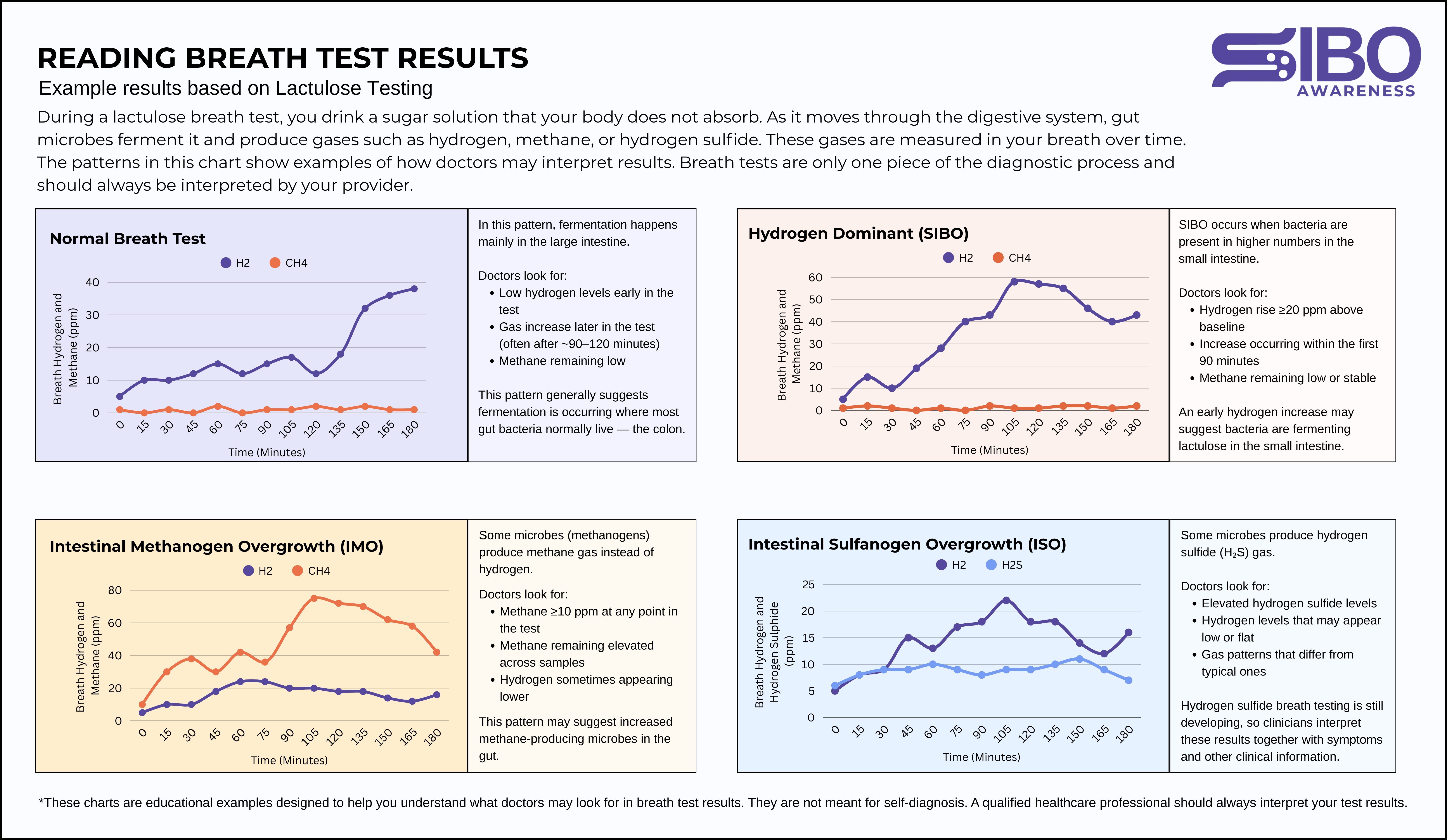
This nationwide study examined how different gases measured during breath testing relate to digestive symptoms. Researchers analyzed results from more than 3,000 patients who completed at-home breath tests measuring hydrogen, methane, and hydrogen sulfide.
Breath tests work by measuring gases produced when microbes ferment carbohydrates in the gut. These gases enter the bloodstream and are exhaled in breath, allowing clinicians to indirectly assess microbial activity in the digestive tract.
Key findings:
Different gases were associated with different symptom patterns. Higher hydrogen levels were linked to diarrhea, methane levels were strongly associated with constipation, and hydrogen sulfide levels were associated with diarrhea, urgency, and abdominal pain.
Hydrogen can be converted into other gases. Some microbes consume hydrogen and convert it into methane or hydrogen sulfide. This means hydrogen levels alone may not always reflect what is happening in the gut.
Measuring three gases may reveal patterns that single-gas tests miss. Because microbes interact with each other and convert gases along metabolic pathways, measuring multiple gases can provide a more complete picture of microbial activity.
What this study shows:
Different microbial gases are associated with distinct symptom patterns. Measuring hydrogen, methane, and hydrogen sulfide together may provide a more complete understanding of the microbial processes contributing to digestive symptoms.
Pros and Cons of Breath Testing for SIBO and Intestinal Methanogen Overgrowth
This review examines how breath testing is used to diagnose SIBO and intestinal methanogen overgrowth (IMO), and why the test must be interpreted carefully. Breath testing is one of the easiest ways to evaluate suspected SIBO. However, the test measures microbial gases rather than bacteria directly, which means several biological and practical factors can influence results.
Key findings:
Breath testing is an indirect measure of microbial overgrowth. Rather than detecting bacteria themselves like the traditional aspirate testing, the test measures gases produced when microbes ferment carbohydrates in the gut.
Transit time in the gut can affect results. The speed at which food moves through the digestive tract—known as orocecal transit time—can influence when colonic fermentation begins. It is assumed that this occurs at 83 minutes as a standard, but in some patients, especially those with a history of upper GI surgery, rapid transit time may cause colonic fermentation to appear faster.
Preparation and testing conditions matter. Diet, medications, recent antibiotics, and adherence to preparation instructions can all influence test outcomes.
Breath testing remains the only practical way to diagnose methane-related overgrowth. Intestinal methanogen overgrowth cannot be reliably detected through small bowel cultures, making breath testing particularly important for identifying methane-producing microbes.
What this study shows:
Breath testing is a valuable diagnostic tool for evaluating microbial overgrowth, but it must be interpreted within the broader clinical context because several biological and technical factors can influence the results.
How These Studies Fit Together
Together, these studies highlight both the strengths and the limits of breath testing.
What breath testing can reveal
Different gases—hydrogen, methane, and hydrogen sulfide—are linked to different digestive symptom patterns.
Measuring these gases can provide insight into microbial activity in the gut.
Why interpretation matters
Breath tests measure gases rather than bacteria directly.
Results can be influenced by factors such as gut transit time, microbial interactions, and testing conditions.
Breath tests work best when interpreted alongside symptoms and clinical history.
Why This Research Matters
For patients and clinicians alike, breath testing remains one of the most useful tools available for investigating unexplained digestive symptoms. It provides a noninvasive way to detect microbial activity that may be contributing to bloating, diarrhea, constipation, or abdominal discomfort.
At the same time, this research highlights that no single gas test provides a complete picture. Understanding how microbial gases interact and recognizing the limitations of breath testing helps clinicians make more informed diagnostic and treatment decisions.
Most importantly, this research underscores that digestive symptoms linked to microbial overgrowth have identifiable biological mechanisms. Continued advances in testing and research are helping bring greater clarity to a condition that has long been difficult to diagnose.